How to Use ChatGPT to Write a Resume: Crafting a Winning CV
In today's competitive job market, a well-crafted resume can significantly boost your chances of landing an interview. With the advancement of technology, artificial intelligence (AI) models like ChatGPT can assist in creating a resume that stands out from the rest. In this article, we will explore how you can effectively utilize ChatGPT to write an impressive resume, while also discussing the differences between a resume and a CV, essential information to provide, and the different components of a strong resume.
Resume vs. CV:
Before diving into the specifics, it is essential to distinguish between a resume and a curriculum vitae (CV). While both documents aim to present your qualifications, skills, and work experiences, they serve different purposes.
Resumes are typically concise and focus on specific job applications. On the other hand, a CV tends to provide a comprehensive overview of your academic and professional history, usually in academic or research-oriented fields.
How to Use ChatGPT to Create an Impactful Resume
ChatGPT can help you with:
- Writing a resume from scratch
- Tailoring a resume to a specific job description
- Crafting resume summaries
- Writing achievement bullet points
Before contacting ChatGPT for resume assistance, gather relevant information: this might include your contact details, job history, educational background, specific skills, and achievements. It's also helpful to identify the role or industry you are targeting for your resume.
Engage ChatGPT: With your information ready, engage ChatGPT by specifying your intent to create a resume. Inform ChatGPT about your career objective or professional summary. This section should briefly outline your career goals and aspirations while emphasizing your strengths and unique selling points. Remember to keep it concise and tailored to the job you are applying for.
Share important details: To generate a well-tailored resume, provide ChatGPT with precise details about your work experience, educational qualifications, and skills. Be as specific as possible, including any notable achievements, projects, or certifications. Accurate and comprehensive information will help ChatGPT craft a resume that highlights your most relevant qualities.
Collaborative process: While ChatGPT can help you generate a draft resume, consider this as a collaborative effort. Engage with ChatGPT throughout the process, providing feedback, clarifications, and making additions or modifications. Remember, you are ultimately responsible for reviewing and fine-tuning the output to match your unique style and preferences.
Formatting and customization: Once you have the base content of your resume, consider formatting and customizing it to suit your needs. Ensure a clear and professional structure, using bullet points, appropriate headings, and font styles. You may also adapt the resume to fit the job description or industry by highlighting relevant skills and experiences.
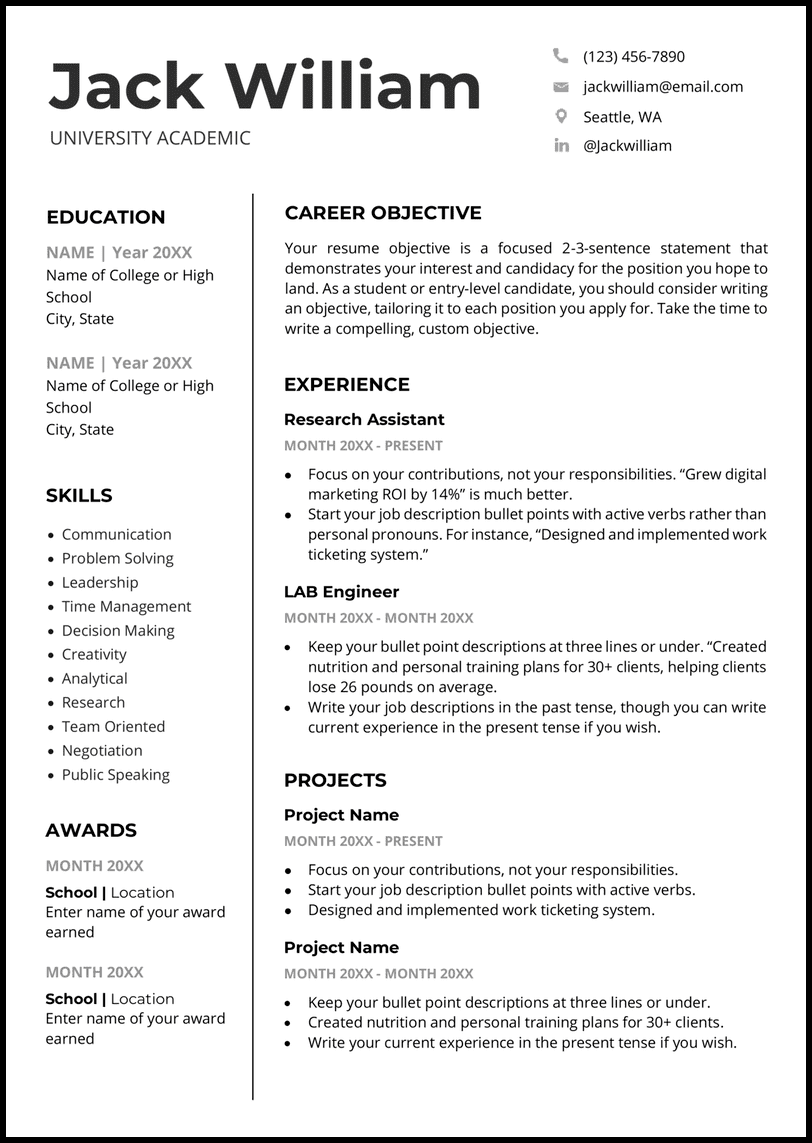
Structure & Headline
A good resume headline is a concise phrase that highlights your most relevant experience or skills relevant to the position you are applying for. It should be eye-catching and compelling, drawing the attention of recruiters. It is a short but impactful one-liner. For example, "Results-driven Marketing Professional with a Proven Track Record of Boosting Sales."
When it comes to structuring your resume, follow these key components:
Contact Information: Provide your name, phone number, email address, and optionally, your LinkedIn profile.
Headline: Recruiters look at resumes for an average of just under 8 seconds before moving on, so it’s important to make a good impression quickly and clearly.
Objective Statement or Professional Summary: Craft a compelling and tailored statement that conveys your career objective or highlights your key qualifications.
Work Experience: List your previous job titles, company names, employment dates, and bullet points describing your responsibilities and accomplishments.
Education: Include your degrees, educational institutions, graduation dates, and any relevant certifications or training programs.
Skills: Highlight your key skills and abilities that are relevant to the job you are applying for.
Achievements: Showcase specific accomplishments or projects where you made a significant impact.
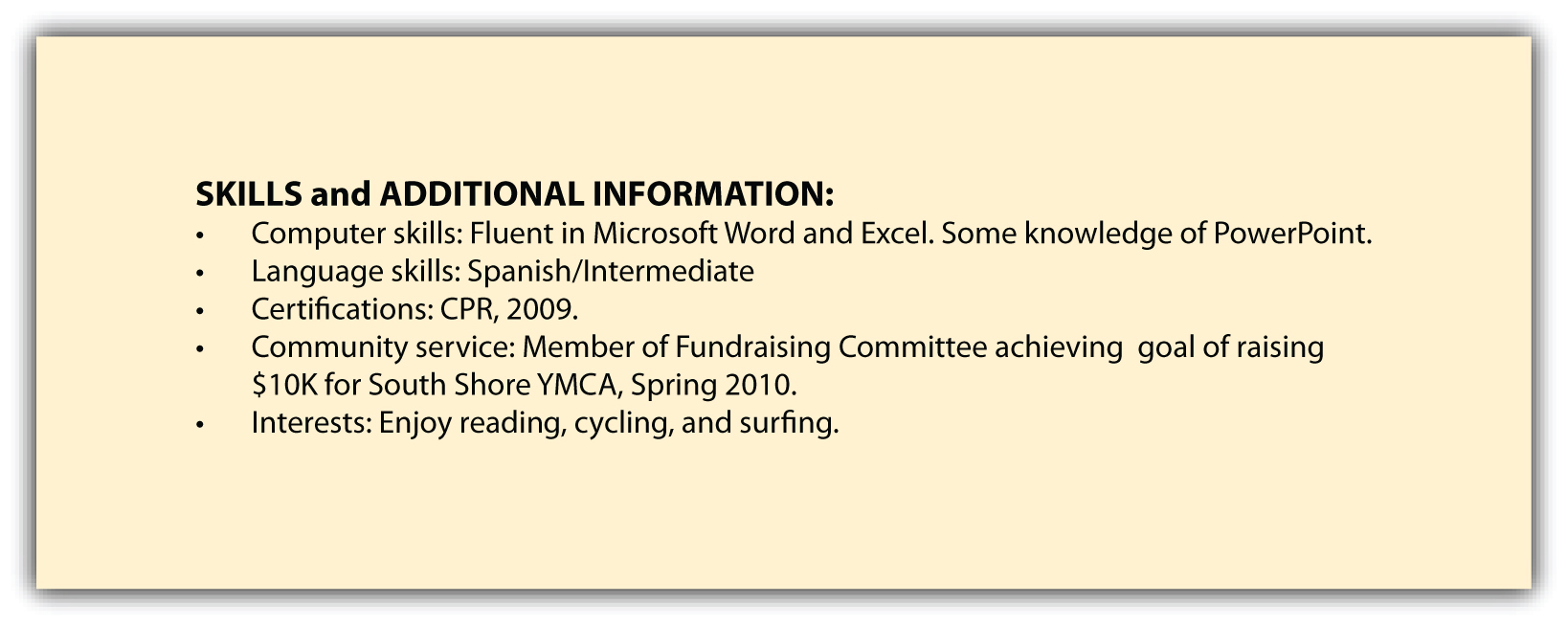
Additional Sections: As per your industry or requirements, include sections such as certifications, publications, languages, or volunteer work.
Useful Prompts
- Write a resume for a [job] based on this job description: [copy and paste it]. Here’s some info on my work experience, education, and achievements: [copy/paste].
- Write a resume using the following information: [contacts, work experience, education, skills]. Use the following structure: […].
- Write 5 resume bullet points, with metrics, based on this job description, and use my resume for reference: [copy+paste the job description and resume].
- Write a professional summary for a [job title] based on my resume below and keep it shorter than 100 words: [copy/paste a draft of your resume].
- Rewrite this work experience [copy and paste it here] to be more impressive and tailored for this [job description].
- Write a cover letter for [job description] using my resume for reference and keep it shorter than 300 words: [copy/paste your resume].